

Latest national wage data
Salary information
Pediatricians, General
$210,040 median per year
See full salary breakdown
| 10th percentile | $91,470 |
|---|---|
| 25th percentile | $138,290 |
| Median | $210,040 |
| 75th percentile | $273,700 |
| 90th percentile | $338,500 |
Source: U.S. Bureau of Labor Statistics, May 2025 OEWS. National estimates for wage and salary employees. Self employed workers are not included. Last reviewed: September 6, 2026.
Direct answer
What you should know
General pediatricians are physicians who provide preventive, developmental, and medical care for infants, children, adolescents, and young adults. Becoming one requires medical school, pediatric residency, state licensure, and commonly board certification.
Responsibilities and work setting
Typical responsibilities
- Perform wellness examinations and monitor growth and development.
- Diagnose and treat acute and chronic childhood conditions.
- Provide immunizations, prevention, safety, nutrition, and family guidance.
- Coordinate referrals, hospital care, schools, therapists, and specialist services.
Where the work happens
- Physician offices, hospitals, outpatient clinics, academic centers, community health, and government programs.
- Office practices may keep regular hours; hospital or urgent-care positions may include nights and weekends.
Education, licensing, and experience
- Complete a bachelor's degree, medical school, and an accredited pediatric residency.
- Meet state physician-licensure requirements.
- Board certification and fellowships are common for pediatric subspecialties.
Employment outlook, 2025–2035
This projection covers general pediatricians; pediatric subspecialists may be classified elsewhere.
| Occupation | SOC | Growth | Annual openings | Typical entry path |
|---|---|---|---|---|
| Pediatricians, general | 29-1221 | 1.5% | 1,000 | Doctoral/professional degree; residency |
Employment and openings are U.S. Bureau of Labor Statistics national projections. Openings are annual averages over the 2025–2035 projection period and include replacement needs.
Sources and review
- BLS Occupational Projections and Worker Characteristics
- BLS Physicians and Surgeons Occupational Outlook Handbook
Last reviewed: September 6, 2026. Editorial and data review: BobUSA, site editor. Wage figures use May 2025 OEWS data; outlook figures use the 2025–2035 BLS Employment Projections.
They have caregiving responsibilities that include treating injuries, diagnosing and treating illnesses, administering vaccinations, and generally overseeing the well-being of the children.
The people who decide to be pediatricians as their primary career need to love being around children and provide the best possible care for children’s issues.
In the USA, pediatrics is one of the topmost specialties in healthcare, with thousands of jobs in all major hospitals and specialty clinics across the states.
That is why it is considered the highest-paying career in the USA, with various specializations under it. The 2 major types of healthcare services offered by general pediatricians include:
- Preventive health maintenance of healthy children
- Dedicated medical care for children with chronic illnesses
Pediatricians are also a great source of counseling and comfort for many parents who are worried about their kids.
Many parents turn to their pediatrician for advice and help regarding the mental and physical issues with their kids.
What Is The Average Salary For a Pediatrician in The USA?
The average salary for a pediatrician is $158/year (as of 2022). The total cash earnings of the pediatricians range from $110K to $219K on the high end.
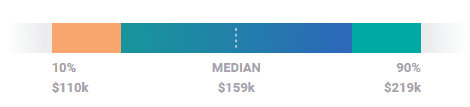
Base Salary | $110k - $219k |
Bonus | $1k - $47k |
Profit Sharing | $5k - $61k |
Total Pay | $116k - $230k |
What Are The Responsibilities Of Pediatricians?

Pediatricians offer their broad skills and expertise to manage the physical, mental, and emotional well-being of kids (from infants to teenage children) at every developmental stage.
The age groups pediatricians usually serve are from babies to young adults, from 0 to 21 years of age.
The major responsibilities of pediatricians are to:
- Provide neonatal care
- Reduce child mortality rate
- Prevent and control early-life infectious disease
- Foster a healthy lifestyle to ensure the proper physical and cognitive development of kids
- Immunizations and ensuring developmental milestones
- Ease suffering caused by illnesses and provide relief to patients
- Educate parents and society about the essentials of childcare
The Job As A Pediatrician

When compared to the other domains of the healthcare industry, a pediatrician’s job is more challenging and demanding.
Most of the time, they face difficulties from the stage of the diagnosis itself as kids are less likely to express their difficulties and symptoms in understandable terms.
There are also limitations in administering diagnostic procedures and medications for the kids. It requires a high level of knowledge and expertise to succeed in a pediatrician’s job.
Expert pediatricians are in high demand in the healthcare industry, which makes it one of the top-paying jobs in America. They usually work during traditional business hours in small clinics, but many also may work in large hospitals.
Some common conditions pediatricians have to deal with include the following:
- Infections – which are very common, especially during the change of seasons.
- Injuries – being active and playful, children are prone to be injured.
- Genetic defects – Many of these can be fully cured by detecting them at early stages
- Organic diseases and psychosomatic dysfunction
- Malignancies (cancerous growths)
However, pediatricians are not just concerned about their patients’ physical well-being.
They also need to go a step ahead to critically administer early detection, prevention, and management of other crucial problems affecting children’s physical and mental well-being, including:
- Developmental disorders
- Behavioral difficulties
- Social stresses
- Functional and educational problems
- Anxiety and depression disorders, etc
Education Of Pediatricians

It usually takes over 10 years to become a pediatrician.
Starting from an average of 4 years to complete a bachelor’s degree, followed by another 4 years for general medical school graduation, and final 3-5 years of intensive primary care pediatric program are needed to complete an accredited pediatric residency program.
The residency training programs in hospitals and other care facilities emphasize practical training in infant, child, adolescent, and young adult care.
Following a residential program, pediatricians in the USA will be eligible for board certification by the American Board of Pediatrics on clearing the comprehensive written and practical examinations.
Re-certification is also required every 7 years.
Final Words

A child’s well-being can never be taken lightly. You can find a pediatric care clinic handy even in the least popular suburbs.
Among other major specialties, pediatrics demands more time and skills from healthcare providers. This puts pediatricians in high demand.
You can find pediatric sub-specialty services in all specialties as Adolescent Medicine, Cardiology, Emergency Medicine, Critical Care, Endocrinology, Infectious Diseases, Gastroenterology, Hematology/Oncology, Nephrology, Rheumatology, Pulmonology, etc. All these make pediatrics the highest-paying job in the USA.
Updated automatically
Current job openings
The occupation is already selected. Change the optional location or use a role tab to refine the live results.
Loading current openings…
JavaScript is required to load the live CareerJet results on this page.